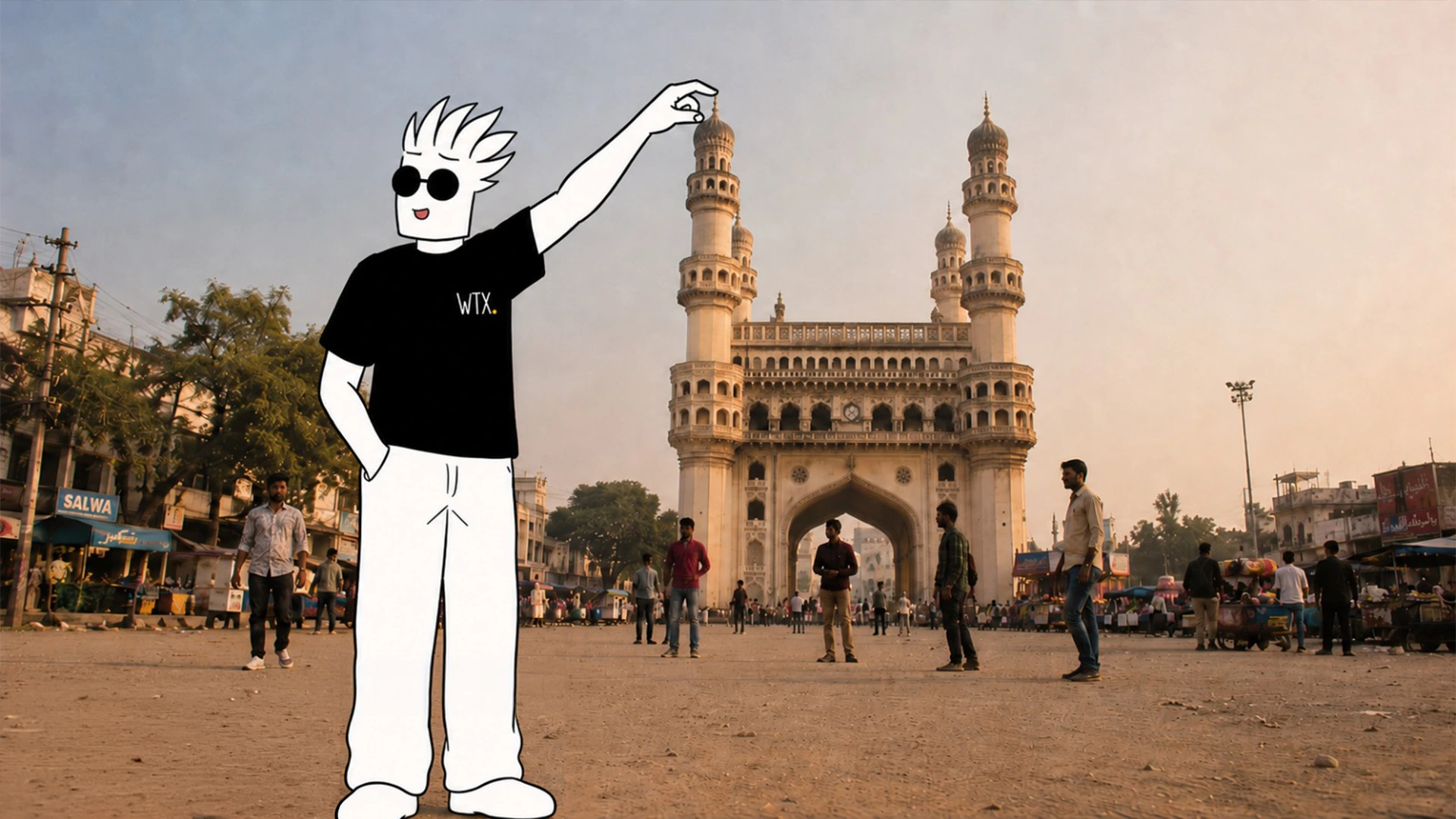
Advertising Without Branding Is Like Asking for Directions in Old City
Old City directions operate on faith and shared understanding: “Take left near the old Irani café.”, or opposite the *place everyone knows*.”
It’s confusing to outsiders, but perfectly clear to locals, which is what brands do, they assume. These are the same companies that don’t understand the difference between branding and advertising.
Advertising gets attention, and Brand positioning gives people mental shortcuts to remmeber it. And without positioning, campaigns begin to contradict themselves. One month luxury, next month quirky, and the next month discount-heavy optimism. Everything is visible, but nothing memorable. A strong brand identity design agency works backward from meaning: What should people feel when they see the visual language, and what should they remember? That is where cultural storytelling in branding matters, especially in cities like Hyderabad, where memory, nostalgia, language, humor, and local codes shape perception more than companies admit. The brands people instinctively trust rarely explain themselves repeatedly. And this coherence matters even more in the age of generative AI in branding.
Design Language: Why Some Brands Dress Like They’re Confused
Design language is often mistaken for aesthetics. It's more about consistency. Studies show that people form visual impressions in under 50 milliseconds, and consistent branding significantly improves recognition and perceived credibility.
When done well, brands feel coherent. When done badly, brands feel confused. Like: • Luxury visuals + discount sale banners • Minimal website + chaotic Instagram memes
Consumers may not consciously explain inconsistency, but they sense it. Research in consumer behavior consistently shows that visual consistency improves trust, recognition, and memory because humans process patterns more quickly than rational explanations. Which explains why iconic brands often feel emotionally familiar. Their visual systems rarely contradict themselves. This matters especially when building iconic brands in Hyderabad, where businesses compete not only for visibility but for mental recall in crowded markets. A recognizable brand becomes psychologically easier to trust.
The Problem With “Premium But Viral But Luxury But Gen Z”
A 2025 India study of 3,000 respondents found people recalled only 1.5 brands on average, despite spending over 2 hours a day watching videos. More than 600 brands were mentioned, but almost none crossed 1% recall. The problem is simple: some ideas naturally clash with one another. Luxury works because it feels restrained. Virality works because it grabs attention quickly. Premium brands often rely on consistency and control, while Gen Z culture rewards speed, humor, personality, and constant reinvention. And brands keep trying to become all of it at once. You see it everywhere while building iconic brands in Hyderabad. A premium café suddenly starts posting chaotic meme content. A luxury real estate page speaks in slang. A wellness brand sounds corporate on LinkedIn and emotionally calm on Instagram.
And now generative AI in branding has made experimentation dangerously easy. The machine will happily generate contradictions because generating is its job, but choosing is yours. Research increasingly shows younger audiences value authenticity and consistency, while quickly rejecting brands that feel forced, trend-chasing, or performative.
Every Hyderabad Brand Wants Jubilee Hills Energy on a Begum Bazaar Budget
The truth is, premium branding is rarely about money alone. It is about consistency. Research in consumer psychology repeatedly shows people trust familiar, predictable brands more because consistency reduces uncertainty. Brands that maintain coherent presentation across touchpoints often see significantly stronger recognition and recall.
Think about Hyderabad itself, Jubilee Hills feels premium because everything reinforces the perception, like similar architecture, cafés, stores, lighting, pricing, even expectations. Nobody walks into Jubilee Hills and suddenly sees a fluorescent flex banner screaming: BUY 2 GET 3!!!
But many businesses want Jubilee Hills energy with a Begum Bazaar budget philosophy: maximum bargaining, minimum patience, and immediate results.
Would Your Brand Survive Without Ads?
Research says that 78% skip ads when possible, with around 60-70% find them irrelevant, and most don’t even remember the brand afterwards.Most brands think they’re competing for attention. They’re not. They’re competing for memory and recognition.
Think about the last time you were hungry. You probably didn’t compare 47 options. One or two names simply appeared in your head first. That’s how most buying decisions happen. Not through discovery.
The strongest brands are often chosen before the customer starts choosing. If your ads disappeared tomorrow, would your brand still be one of those names?
FAQs
1. Why is branding important for startups?
Branding helps startups build recognition and trust faster in crowded markets. It reduces the need to re-explain the business at every touchpoint.
2. What are the latest branding trends in India?
India is shifting toward minimal, digital-first branding with strong storytelling and consistency across platforms. Design is becoming simpler, but strategy is becoming deeper.
3. What is emotional branding?
Emotional branding connects a brand to feelings like trust, nostalgia, or aspiration. It focuses on how people feel, not just what they see.
4. How do businesses create strong visual identities?
A strong visual identity comes from the consistent use of color, typography, tone, and design systems. Repetition builds recognition over time.
5. What makes branding different from advertising?
Branding builds long-term perception, while advertising creates short-term attention. One builds memory, the other drives visibility.