
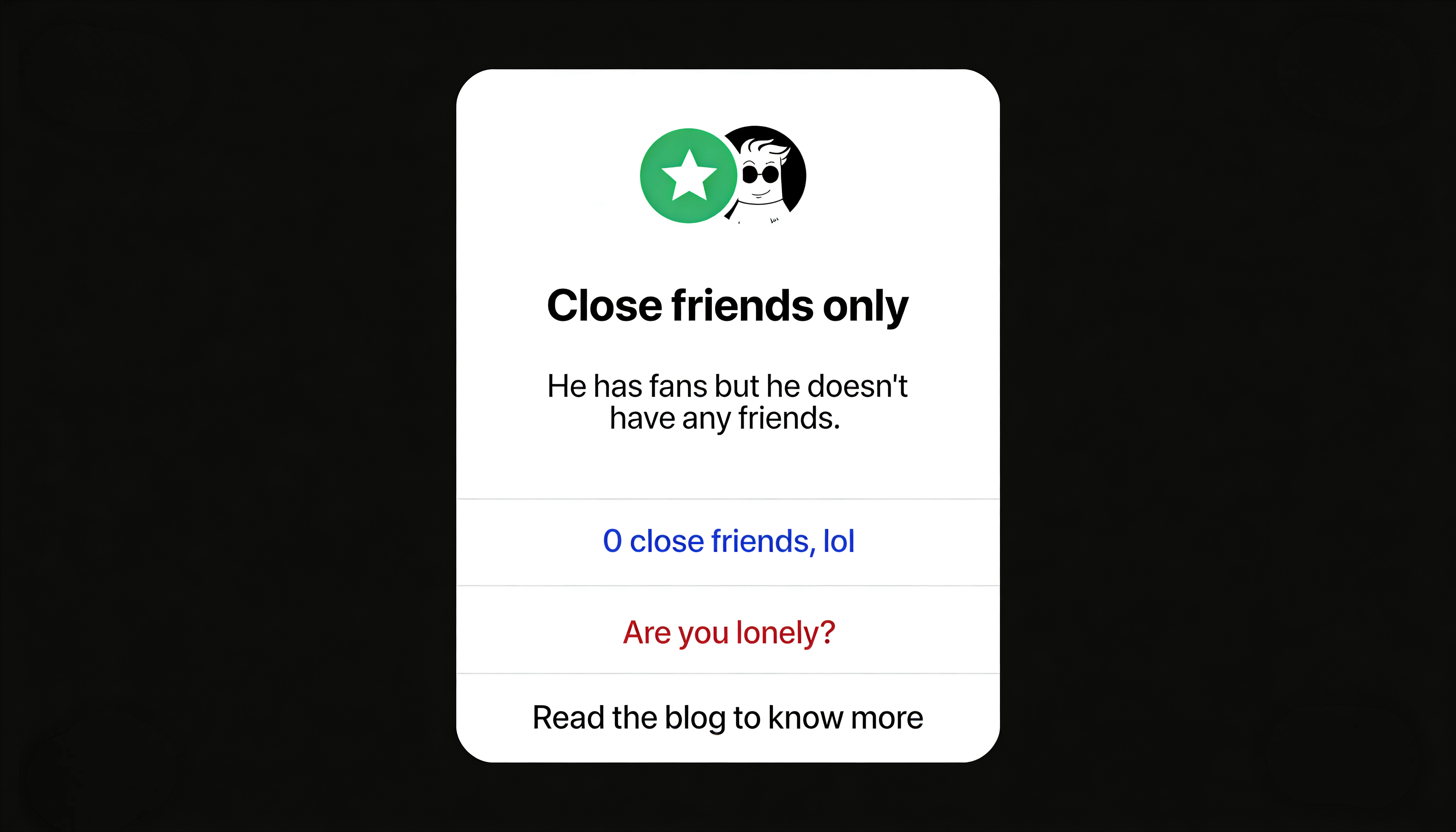
Welcome to the loneliness economy.
What was once a social issue quietly became a market opportunity. And as human vulnerability increases, branding agencies are making more emotional connections with consumers. Loneliness was a social problem until branding firms used emotional vulnerability to make you their friend. Modern brands now sell emotional connection in a package with same-day delivery and an extra-charges button.
Your Spotify playlists understand your mood better than most people do. Duolingo talks to you like an unreal stable situationship. Food delivery apps check on you more consistently than your own friends. In the end, push notifications and personalized playlists became closer to humans. And the interesting part is that the strategy works. Studies now show that loneliness increases attachment to brands, especially those that create a strong emotional connection. Nearly 85% of Indian Gen Z consumers say they prefer brands with personal meaning. Not quality, or affordability, or discounts. This explains why top branding firms and every ambitious creative agency today are obsessed with brand strategy rooted in personality and visual storytelling. Because humans can replace products, but not emotional reliance.
With millennials and Gen Z having shorter attention spans, brands are more focused on being part of your emotional lives, not shelf life.
And honestly, you can’t even blame them entirely. In a world where attention spans are collapsing, product marketing alone is not enough. Brand personality, storytelling, and emotional relevance are important, too. Which is why brands have slowly started sounding like your close buddy. Apps now even congratulate you for drinking water, sleeping on time, meditating, journaling, walking, breathing, and surviving Monday mornings. Emotional maintenance in user experience looks like Rapido sending a notification for a ride at 9 am, and chatboxes remembering your last meals. Customer support teams are trained to sound emotionally intelligent friends who use phrases like “we completely understand how frustrating that must feel.” Sure, sure, AI knows how we feel. Somewhere, automated replies have developed better communication skills than most humans, and consumers are responding to them. Studies show younger audiences are far more likely to trust brands that create familiarity, personality, and consistency online. This explains why top marketing agencies are obsessing over tone, relatability, and conversational design rather than traditional hard selling. Because modern loyalty is no longer built through emotional habits.
Creators understood this early. Influencers no longer market products like salespeople. They integrate them into their lives like trusted companions. Even wellness brands have perfected the language of soft emotional authority. They speak like caring mothers with minimalist packaging and a calming Serif font. So that the product almost becomes secondary to the emotional atmosphere surrounding it. This shift has completely changed the brand identity. The strongest brands today are not necessarily the loudest or the cheapest. They are the ones that feel emotionally familiar, which is why branding agencies are investing heavily in branding and strategy rooted in personality-first communication. Because people may forget advertisements. But they remember how a brand made them feel during lonely hours. And amid endless social media trends, overstimulation, and emotional exhaustion, familiarity has become one of the most profitable forms of brand identity. The shift is subtle until you notice it everywhere. They use humour, vulnerability, reassurance, therapy language, “checking in” culture, and hyper-personalised messaging because traditional sales tactics no longer work with emotionally exhausted audiences.
Gen Z is rewriting the entire language of branding. According to recent reports, emotional connection and relatability now influence brand loyalty more than legacy, scale, or celebrity endorsements in India. The strongest brands today have emotional brand positioning. They are the ones that feel emotionally familiar enough to enter someone’s daily routine without resistance. A recent emotional marketing study found that over half of Gen Z consumers purchased from brands they felt emotionally attached to. Which makes sense when you realise modern consumers are not just buying products during lonely or stressful moments. They are buying to fix moods like a coffee order after a terrible meeting or a perfect skincare routine to pretend they have it all together. So the brands make spending sound therapeutic.
That is why modern campaigns are obsessed with community-building. Not audience-building. There is a reason every brand suddenly wants a Discord server, a “safe space,” a members-only club, a creator circle, or a wellness-driven identity. Special. That’s how Selena Gomez's followers felt when they were on her close friends list, too. Even influencer marketing now works more like a digital friendship simulation. Which explains why pictorial storytelling, day-in-the-life content, vulnerable vlogs, voice notes, “get ready with me” videos, and oversharing culture perform so well online. People are engaging because repeated emotional familiarity creates attachment.
This also explains the rise of superfandom culture. Music, fashion, beauty, gaming, and creator-led brands are changing their communication style based on buyer behavior. According to recent reporting on the “superfan economy,” audiences today are seeking emotional connection and community during periods of uncertainty, making fandom one of the most profitable forms of consumer engagement. Because people stay where they feel seen.
And in a generation experiencing rising loneliness, economic instability, burnout, remote lifestyles, and overstimulation, emotional familiarity has become incredibly valuable. The result is a culture where brands are increasingly stepping into emotional spaces once occupied by friendships, communities, and everyday human interaction.
And honestly, the strategy is hard to ignore. Consumers are more likely to trust brands that mirror their values, language, humour, routines, and insecurities. The feeling a consumer gets while interacting with the brand matters just as much as the product itself. This is where branding and positioning have quietly shifted from selling utility to selling emotional reassurance. And naturally, every ambitious branding agency wants to recreate that same attachment for the brands they build.
If advertising is all about adapting, then emotional relatability became their solution to the loneliness economy.
FAQs
1. What is the loneliness economy?
The loneliness economy refers to products, services, and digital platforms designed to address feelings of isolation and social disconnection. It includes everything from AI companions and social apps to wellness services and community-focused brands.
2. Why is the loneliness economy growing?
The loneliness economy is growing due to changing lifestyles, remote work, urban living, and increased digital interaction. Many people have fewer opportunities for meaningful social connections than previous generations.
3. How are brands using loneliness in marketing?
Brands increasingly focus on community-building, personalization, and emotional storytelling to create stronger relationships with consumers. Many campaigns emphasize belonging, connection, and shared experiences.?
4. What role do AI chatbots play in the loneliness economy?
AI chatbots provide conversation, emotional support, and companionship-like interactions for users seeking connection. They are becoming an increasingly visible part of the loneliness economy, particularly in digital wellness and support services.
5. Can AI companions replace real human relationships?
AI companions can provide conversation and emotional engagement, but they cannot fully replicate the complexity, empathy, and mutual understanding found in human relationships. Most experts view them as supplements rather than replacements.